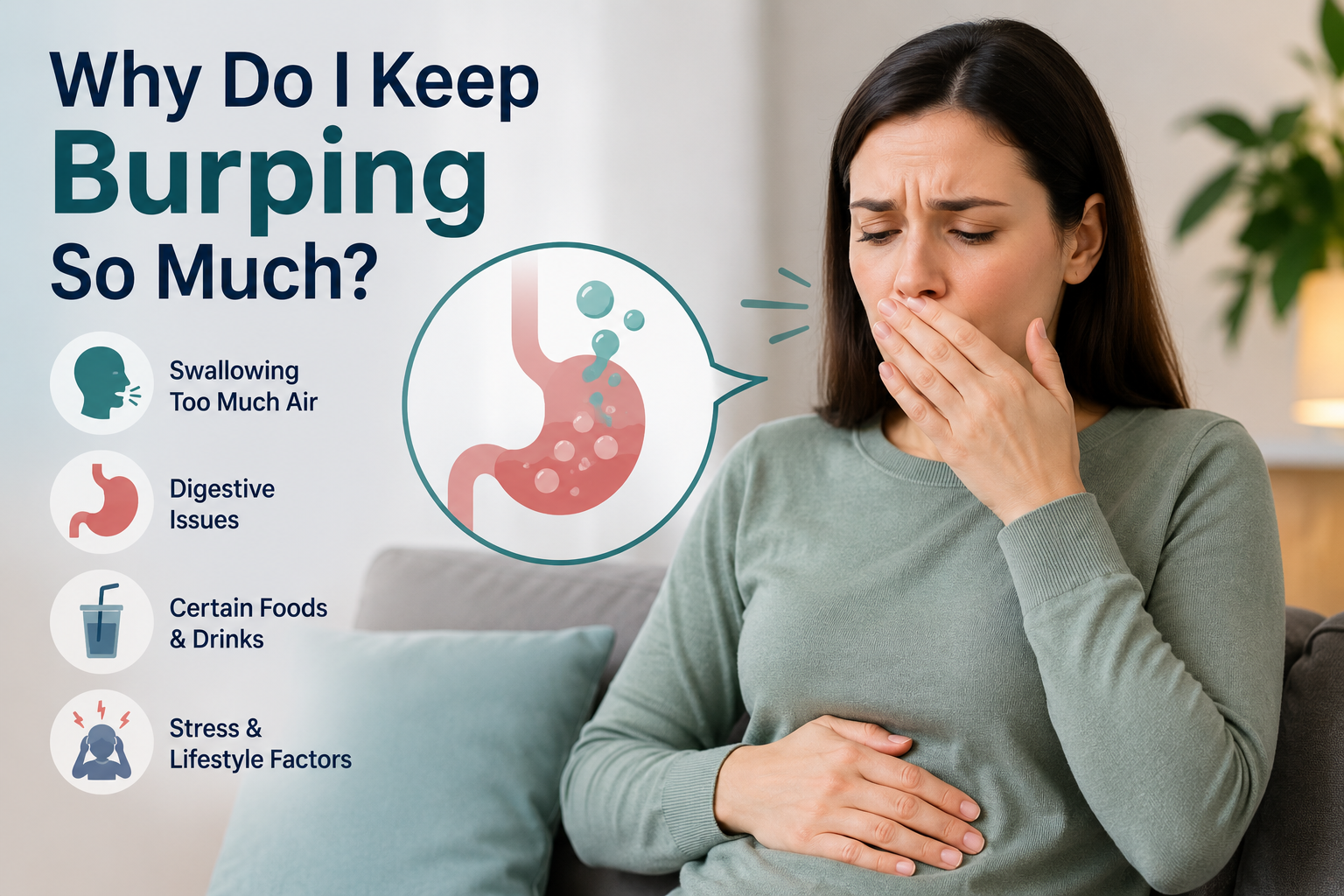
If you are wondering why do I keep burping so much, the answer may involve swallowed air, reflux, eating habits, digestive conditions, or a brain-gut belching pattern. The timing of the burps often gives the best clue.
Burping is normal. Every time you eat or drink, you swallow some air, and the body needs a way to release it. The concern starts when burping becomes constant, unusually forceful, embarrassing, painful, or frequent enough to interrupt meals, sleep, work, or conversation.
The important point is that frequent burping does not always mean your stomach is producing excessive gas. In many people, the main issue is extra air entering the esophagus or stomach. In others, burping accompanies acid reflux, indigestion, food intolerance, delayed stomach emptying, or another digestive problem.
The National Institute of Diabetes and Digestive and Kidney Diseases notes that people may normally belch up to about 30 times a day. A number alone does not define a disorder. What matters more is whether the symptom is new, persistent, uncomfortable, or accompanied by other changes.
| KEY TAKEAWAYS
· Frequent burping often starts with swallowed air from eating quickly, carbonated drinks, gum, straws, smoking, or repeated air swallowing. · Burping with heartburn, sour liquid in the throat, or symptoms after large meals can point toward acid reflux. · Rapid, repetitive burps that occur many times in succession and are not clearly tied to meals can be a form of supragastric belching, a brain-gut behavioral pattern. · Burping plus early fullness, nausea, abdominal pain, diarrhea, constipation, or weight loss deserves a broader digestive evaluation. · A food-and-symptom diary can be more useful than randomly eliminating many foods. · Chest pain, persistent vomiting, black or bloody stool, trouble swallowing, severe abdominal pain, or unexplained weight loss needs medical attention. |
First, Identify Your Burping Pattern
Instead of starting with a long list of diseases, pay attention to when the burping happens. Four patterns cover many of the common situations.
| Burping Pattern | Common Possibilities | Useful Clue |
| Mostly during or after meals | Swallowed air, fast eating, carbonated drinks, large meals | Does slowing down reduce it? |
| With heartburn or sour regurgitation | GER or GERD | Is it worse after large meals or lying down? |
| Rapid, repetitive bursts throughout the day | Supragastric belching or habitual air movement | Does it lessen during sleep or when distracted? |
| With bloating, pain, diarrhea, constipation, or early fullness | Food intolerance, dyspepsia, IBS, gastroparesis, SIBO, or another GI issue | Which other symptom appears with the burping? |
Pattern 1: Are You Swallowing More Air Than You Realize?
This is one of the most common explanations for frequent burping.
You naturally swallow air while eating and drinking. You swallow more when you eat quickly, talk while chewing, drink through a straw, chew gum, suck hard candy, smoke, vape, or repeatedly sip carbonated beverages. Anxiety can also change breathing and swallowing patterns, leading some people to take in air without noticing.
Carbonated drinks add another source: carbon dioxide. Soda, sparkling water, beer, and other fizzy drinks release gas in the stomach, and that gas often comes back up as a burp.
If burping is strongest during meals and for a short time afterward, start here before assuming you have a digestive disease.
What to Try for Seven Days
- Stop carbonated drinks temporarily.
- Skip gum and hard candy.
- Eat while seated and slow the pace of meals.
- Take smaller bites and finish chewing before talking.
- Avoid drinking through straws.
- Notice whether you repeatedly gulp air when anxious, sighing, or clearing your throat.
The NIDDK recommends many of these same steps for reducing swallowed air. If the burping falls dramatically within a week, the trigger was likely behavioral or dietary rather than a hidden stomach problem.
Pattern 2: Does the Burping Come With Heartburn or a Sour Taste?
Burping can accompany gastroesophageal reflux, often called acid reflux. In reflux, stomach contents move upward into the esophagus. Common symptoms include heartburn and regurgitation, but some people also experience nausea, throat irritation, cough, or belching.
The NIDDK guide to GER and GERD explains that reflux becomes GERD when it causes repeated bothersome symptoms or complications over time.
Clues that reflux may be part of the burping pattern include:
- A burning feeling behind the breastbone.
- Sour or bitter fluid reaching the throat or mouth.
- Symptoms after large or high-fat meals.
- Burping and heartburn that worsen when lying down soon after eating.
- Chronic throat clearing, hoarseness, or cough in some people.
Eating smaller meals, avoiding food for a few hours before lying down, and identifying personal triggers can help. If reflux symptoms occur frequently, wake you at night, or continue despite over-the-counter treatment, a clinician should evaluate whether GERD or another condition is present.
Pattern 3: Are the Burps Rapid, Repetitive, and Almost Continuous?
This pattern can be different from ordinary stomach belching.
Doctors distinguish gastric belching from supragastric belching. With gastric belching, swallowed air reaches the stomach and is later released. With supragastric belching, air is drawn into the esophagus and expelled almost immediately, without first accumulating in the stomach.
The result can be a rapid series of burps that happens repeatedly during the day. The behavior is often unconscious. It may become more frequent during stress, conversation, or attention to the symptom and may decrease during sleep or distraction.
The American Gastroenterological Association clinical update on belching recommends distinguishing gastric from supragastric belching because the treatments differ. Brain-gut behavioral therapies such as diaphragmatic breathing, cognitive behavioral therapy, and speech therapy can help supragastric belching.
This does not mean the symptom is imaginary. Supragastric belching is a real, measurable air-flow pattern. The difference is that treating stomach acid or intestinal gas alone may not solve it.
Pattern 4: Is Burping Only One Part of a Bigger Digestive Problem?
When frequent burping appears with other symptoms, the combination is often more informative than the burping itself.
Burping + Early Fullness + Upper-Abdominal Discomfort
This can fit indigestion, also called dyspepsia. People may feel full unusually early, stay uncomfortably full after eating, experience nausea or upper-abdominal burning, and burp frequently.
Functional dyspepsia is common and involves altered gut-brain function even when no structural disease is found. Other causes of dyspepsia can include gastritis, peptic ulcer disease, medication effects, and Helicobacter pylori infection.
Burping + Bloating + Diarrhea After Certain Foods
Food intolerance becomes more likely when symptoms repeatedly follow the same foods. Lactose intolerance is one example. Problems digesting fructose or other carbohydrates can also cause gas, bloating, abdominal discomfort, and bowel changes.
The key word is pattern. A random day of bloating after beans does not prove an intolerance. Repeated symptoms linked to a specific food category are more useful.
Burping + Bloating + Weight Loss or Persistent Diarrhea
This combination deserves medical evaluation. Conditions such as celiac disease, small intestinal bacterial overgrowth, malabsorption, and other digestive disorders can cause persistent symptoms.
SIBO is often mentioned online whenever gas appears, but burping alone is not enough to diagnose it. Testing is usually considered in the context of compatible symptoms and risk factors rather than as a first step for isolated belching.
Burping + Nausea + Feeling Full for Hours
Delayed stomach emptying, or gastroparesis, can cause prolonged fullness, nausea, bloating, and upper digestive symptoms. It is more likely to be considered when there are risk factors such as diabetes, certain medications, previous upper-GI surgery, or other compatible symptoms.
Can Stress or Anxiety Really Make You Burp More?
Yes, although the mechanism is usually not that stress creates large amounts of stomach gas.
Stress and anxiety can change breathing, swallowing, muscle tension, gut sensitivity, and attention to body sensations. Some people swallow more air. Others develop repetitive supragastric belching. Reflux and functional dyspepsia can also feel worse during stressful periods.
This is why diaphragmatic breathing can help some people. The goal is not simply relaxation. It changes the breathing and abdominal movement pattern that can drive repeated air entry and belching.
A Simple Diaphragmatic Breathing Practice
Sit comfortably with one hand on your upper chest and the other on your abdomen. Breathe in slowly through your nose and allow the abdomen to expand while keeping the upper chest relatively quiet. Exhale slowly. Practice for several minutes, especially when repetitive burping starts.
People with persistent supragastric belching may benefit from formal training with a speech therapist, behavioral therapist, or clinician familiar with disorders of gut-brain interaction.
Do Gas Medicines Stop Burping?
Sometimes, but they are often overused for this symptom.
Simethicone is commonly used for intestinal gas and bloating. It can help gas bubbles combine and pass more easily, but it does not stop the act of swallowing air. If the main problem is aerophagia or supragastric belching, a gas medicine may do very little.
Antacids or acid-suppressing medicines can help when acid reflux is contributing to symptoms, but they should not be used indefinitely just because burping is present. Persistent symptoms need the underlying pattern identified.
Enzyme products can be useful for specific problems, such as lactase for lactose intolerance, but they are not universal anti-burping treatments.
Should You Cut Out Gas-Producing Foods?
Not automatically.
Beans, broccoli, cabbage, onions, dairy, high-fiber foods, and certain carbohydrates can contribute to intestinal gas in some people. However, much of that gas is produced farther down in the digestive tract and is more likely to cause bloating or flatulence than isolated belching.
Large, unnecessary elimination diets can reduce nutritional variety without solving the problem. A better strategy is to track what you eat, when burping happens, and what other symptoms occur.
If a consistent pattern appears, a clinician or registered dietitian can help decide whether a targeted trial, such as lactose reduction or a short supervised low-FODMAP approach for IBS symptoms, makes sense.
The 7-Day Burping Log: What to Track
| Track | Question to Answer |
| Time | When did the burping start? |
| Meal or drink | What and how much did you consume? |
| Carbonation | Any soda, seltzer, beer, or sparkling drink? |
| Speed | Did you eat quickly or while talking? |
| Other symptoms | Heartburn, nausea, bloating, pain, diarrhea, constipation? |
| Stress level | Calm, rushed, anxious, or focused on the symptom? |
| Position | Did it worsen after lying down or bending? |
A short log can show whether the problem follows fizzy drinks, occurs mainly after oversized meals, appears with reflux, or happens independently of food. That information can shorten the diagnostic process.
When Does Frequent Burping Need Testing?
Most people do not need an endoscopy, CT scan, or breath test because they burp a lot for a few days.
Testing becomes more reasonable when symptoms persist, interfere with daily life, or come with signs of another condition. Depending on the pattern, a clinician may consider blood tests, H. pylori testing, celiac testing, breath testing for selected carbohydrate intolerances, upper endoscopy, reflux monitoring, or tests of stomach emptying.
For suspected supragastric belching, impedance-pH monitoring can help distinguish the direction and timing of air movement, although the diagnosis can often be strongly suspected from the clinical pattern.
When Should You See a Doctor?
Make an appointment if the burping is persistent, worsening, or bothersome enough to affect your daily activities, especially if it comes with abdominal pain, constipation, diarrhea, recurrent heartburn, or unexplained weight loss.
Seek urgent medical care if burping occurs with:
- Chest pressure or pain, especially with shortness of breath, sweating, faintness, or pain spreading to the arm, jaw, back, or neck.
- Severe or constant abdominal pain.
- Persistent vomiting or inability to keep fluids down.
- Vomiting blood or material that looks like coffee grounds.
- Black, tarry stool or visible blood in stool.
- New difficulty swallowing or painful swallowing.
- Rapid abdominal swelling with severe illness.
Burping by itself is usually not an emergency. The accompanying symptoms are what change the urgency.
Frequently Asked Questions
Why am I burping all day even when I have not eaten?
Swallowed air and supragastric belching can occur independently of meals. Anxiety, repeated sighing, throat clearing, gum, smoking, and unconscious air movement are possible contributors. Persistent symptoms should be evaluated if they are disruptive or new.
Can acid reflux cause constant burping?
Yes. Reflux can accompany frequent belching, particularly when there is heartburn, sour regurgitation, or symptoms after large meals and lying down. Burping alone, however, does not confirm GERD.
Why do I burp after drinking water?
You may swallow air while drinking, especially if you drink quickly, gulp from a bottle, use a straw, or repeatedly sip. Carbonated water adds carbon dioxide and is much more likely to trigger burping.
Can H. pylori cause burping?
- pylori can cause gastritis and peptic ulcer disease, which may produce indigestion symptoms such as upper-abdominal discomfort, nausea, early fullness, or belching. Burping by itself is not specific enough to diagnose H. pylori.
Can too much burping be a sign of cancer?
Burping alone is rarely a specific cancer sign. Concern rises when persistent digestive symptoms occur with unexplained weight loss, progressive trouble swallowing, GI bleeding, persistent vomiting, anemia, or significant appetite loss.
Does SIBO cause burping?
SIBO can cause excess gas, bloating, diarrhea, and sometimes upper digestive symptoms, but isolated burping is not enough to diagnose SIBO. Testing is generally reserved for people with a compatible symptom pattern and risk factors.
How do I stop repetitive burping from anxiety?
Slow nasal breathing, diaphragmatic breathing, reducing repeated air swallowing, and addressing anxiety triggers can help. If burping occurs in rapid repeated bursts, ask a clinician whether supragastric belching could be involved because behavioral therapy and speech therapy may be effective.
The Bottom Line
If you keep burping, the most useful clue is the pattern, not the volume of gas you imagine is inside your stomach.
Burping that follows fast meals, gum, straws, or carbonated drinks often comes from swallowed air. Burping with heartburn or regurgitation can fit reflux. Rapid repetitive burping throughout the day may be supragastric belching. Burping with early fullness, pain, bowel changes, or weight loss deserves a broader digestive evaluation.
Start by removing obvious air-swallowing triggers and tracking symptoms for several days. If the problem continues, take that pattern to a healthcare professional rather than cycling through random supplements and restrictive diets. Frequent burping is usually manageable once the mechanism behind it is identified.
This article provides general educational information and is not a substitute for individualized medical care. Digestive guidance was checked against current U.S. clinical and federal health sources available in August 2026.