A practical 2026 guide for recognizing a skin boil, reducing irritation, and knowing when a breast or skin exam is needed
A boil under breast tissue often begins as a tender bump in the skin fold where heat, sweat, friction, and hair follicles meet. A true boil is a localized infection that forms around a hair follicle and fills with pus. Many small boils improve with careful home care, but not every painful lump beneath the breast is a simple boil. Recurrent nodules may be hidradenitis suppurativa, a deeper breast lump may be an abscess, and rapidly spreading breast redness requires prompt medical evaluation.
The safest approach is not to diagnose the bump from appearance alone. Instead, look at how quickly it developed, whether it is centered in the skin or deeper in the breast, whether it keeps returning, and whether fever or spreading redness is present.
| KEY TAKEAWAYS
· A boil is usually a painful, pus-filled infection in the skin, not a lump deep inside the breast. · Use a warm compress for 10 to 15 minutes, three to four times daily. Never squeeze, cut, or puncture the bump. · Fever, rapidly spreading redness, severe pain, rapid enlargement, diabetes, immune suppression, pregnancy, or breastfeeding can change how urgently you need care. · Repeated boil-like lumps, paired blackheads, scars, or tunnels under the breast may indicate hidradenitis suppurativa. · Diffuse breast swelling, orange-peel skin, nipple inversion, or redness that does not improve needs a clinical breast evaluation. |
Start Here: A 60-Second Self-Check
Use these questions to decide which path fits best. This is a triage aid, not a diagnosis.
| More like a small boil | Needs a prompt appointment | Needs urgent evaluation |
| One small bump centered in the skin | Bump is enlarging or very painful | Fever, chills, faintness, or feeling very ill |
| Tender, red, or purple with a visible center | No improvement after several days of home care | Redness is spreading quickly or red streaks appear |
| No fever and no spreading redness | The lump keeps returning in the same area | Rapid swelling of much of the breast |
| You otherwise feel well | You have diabetes or a weakened immune system | Breathing trouble, confusion, or severe weakness |
What Does a Boil Under the Breast Usually Look and Feel Like?
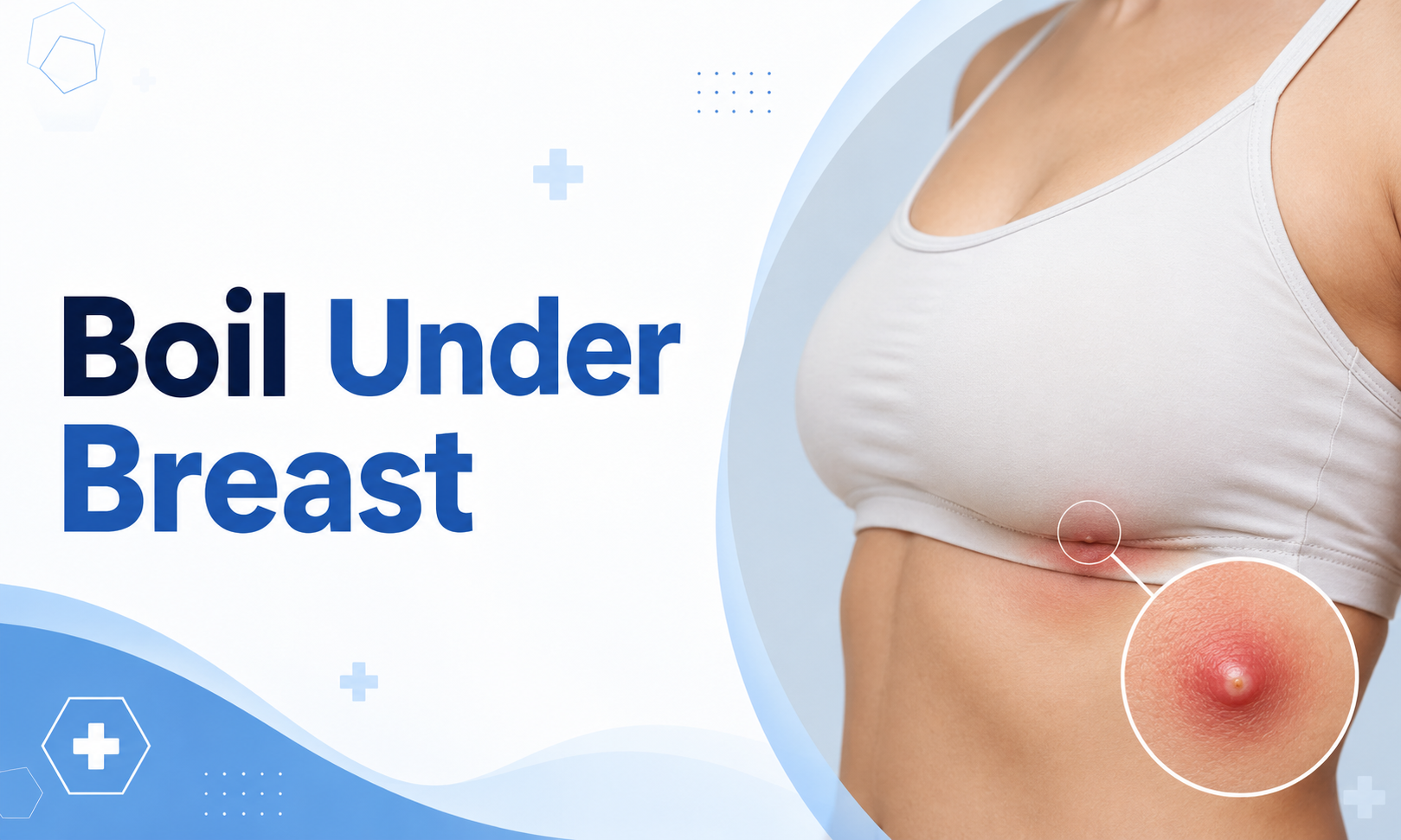
A boil, also called a furuncle, forms when bacteria infect a hair follicle and nearby skin. It often starts as a firm, sore spot and becomes larger over several days as pus collects. Depending on skin tone, the surrounding skin may look pink, red, deep red, violet, brownish, or darker than nearby skin.
- A round or oval bump that is painful to touch
- Warmth and swelling around the spot
- A white or yellow center that may appear as pus approaches the surface
- Drainage, crusting, or relief in pressure after it opens
- A location in the inframammary fold, where the breast rests against the chest
Boils develop in the skin. A lump that feels clearly deeper in the breast, persists after skin inflammation settles, or is not connected to a pore or hair follicle should be examined rather than assumed to be a boil.
Why Do Boils Form Beneath the Breast?
The fold beneath the breast creates a warm, moist environment. Sweat, friction from skin or a bra band, shaving, scratching, and tiny breaks in irritated skin can make it easier for bacteria to enter a follicle. Staphylococcus aureus is a common cause of boils, including strains that resist some antibiotics.
Factors that can increase the chance of a boil or make infections harder to clear include:
- Heavy sweating, hot weather, exercise, or prolonged dampness
- A tight, rough, or poorly fitting bra that repeatedly rubs the same area
- Shaving, plucking, or skin injury in the fold
- Eczema, intertrigo, or another condition that weakens the skin barrier
- Diabetes, immune suppression, or medicines that reduce immune activity
- Close contact with someone who has a staph or MRSA infection
- A history of recurrent boils or hidradenitis suppurativa
The Three-Step Home Care Plan for a Small, Uncomplicated Boil
Home care is reasonable only when the bump is small, localized, and not accompanied by fever, rapidly spreading redness, or serious illness.
Step 1: Encourage natural drainage without forcing it
Apply a clean, warm compress for 10 to 15 minutes, three to four times a day. Use comfortably warm water, not water hot enough to burn the skin. Heat may improve comfort and help the boil drain on its own. The American Academy of Dermatology gives the same basic approach in its boil care guidance.
Step 2: Protect the skin fold
- Wash gently with mild soap and water, then pat the fold completely dry.
- Wear a clean, breathable bra or soft clothing that does not press on the bump.
- Place clean gauze over a draining lesion and replace it whenever wet or soiled.
- Wash your hands before and after touching the dressing.
- Do not share towels, razors, washcloths, or clothing that contacts drainage.
Step 3: Manage pain safely
Acetaminophen or ibuprofen may help some adults when used according to the package directions. Ibuprofen is not appropriate for everyone, including some people with kidney disease, stomach ulcers, bleeding risks, or certain medication interactions. Ask a pharmacist or clinician when you are unsure.
What Should You Never Put on or Do to a Breast Boil?
The urge to “bring it to a head” can cause more harm than good. Avoid:
- Squeezing, popping, piercing, or cutting the bump
- Using a needle, razor blade, or lancet at home
- Applying undiluted essential oils, bleach, alcohol, toothpaste, or other caustic remedies
- Repeatedly scrubbing the area or using abrasive exfoliants
- Putting adhesive directly over fragile or draining skin
- Using leftover oral antibiotics or someone else’s prescription
A deep or large abscess often needs professional drainage. Antibiotics may be added when there is surrounding cellulitis, fever, immune risk, recurrent infection, or concern for MRSA, but antibiotics alone may not empty a walled-off pocket of pus.
Is It Really a Boil? Five Common Look-Alikes
1. Hidradenitis suppurativa
Hidradenitis suppurativa, often shortened to HS, is a chronic inflammatory skin disease rather than a hygiene problem or a series of ordinary infections. It commonly affects areas where skin rubs, including beneath the breasts. Clues include repeated deep nodules, paired blackheads, several affected folds, foul-smelling drainage, scars, and tunnels beneath the skin. Early treatment can reduce future damage. See the Mayo Clinic overview of hidradenitis suppurativa for a patient-friendly description of its pattern.
2. Inflamed epidermoid cyst
A cyst is a sac under the skin that may have a small central opening. It can become red and painful when inflamed or infected. Cysts often return unless the sac is removed after the acute inflammation settles.
3. Folliculitis or an ingrown hair
Folliculitis usually produces several smaller bumps or pustules around hair follicles. An ingrown hair may show a trapped or curved hair and often follows shaving or plucking. Either can sometimes progress into a deeper boil.
4. Intertrigo with yeast or bacterial overgrowth
Intertrigo is irritation caused by moisture and friction in a skin fold. It tends to create a broader raw, itchy, burning rash rather than one central pus-filled lump. Yeast can cause small “satellite” spots around the main rash. Treatment differs from boil care, so persistent fold rashes should be assessed.
5. A breast abscess or another breast condition
A breast abscess is a deeper collection of pus within breast tissue. It may cause a deep tender mass, warmth, swelling, and fever, especially during breastfeeding. Ultrasound is often used to confirm a fluid collection and guide drainage. A persistent deep lump should not be managed as a surface boil.
What If You Are Pregnant or Breastfeeding?
Contact your obstetric clinician, primary care professional, or breastfeeding medicine provider promptly for a painful breast lump, fever, wedge-shaped redness, flu-like symptoms, or a surface lesion near the nipple. Mastitis and breast abscesses can progress and may require antibiotics, ultrasound, or drainage.
Do not stop breastfeeding automatically. In many infections, breastfeeding or milk expression can continue with professional guidance. However, an infant’s mouth and pump parts should not contact pus, an open infected wound, or a drainage site. Cover open tissue with a clean, dry dressing and obtain individualized advice, particularly for premature or medically fragile infants.
When Should a Clinician Examine the Lump?
Arrange a same-day or prompt medical assessment when any of the following applies:
- The bump worsens rapidly, becomes very painful, or grows despite warm compresses
- You develop fever, chills, fatigue, or a general sick feeling
- Redness spreads beyond the lump, the skin becomes increasingly hot, or red streaks appear
- There are several boils, a cluster of connected bumps, or recurrent lesions
- The lesion has not clearly improved within several days or has not healed within about two weeks
- You have diabetes, poor circulation, immune suppression, or take immune-suppressing medication
- You are pregnant, recently gave birth, or are breastfeeding
- The lump feels deep in the breast rather than in the skin
- There is nipple discharge, nipple inversion, or a persistent breast mass
Emergency care is appropriate for rapidly spreading infection accompanied by high fever, confusion, fainting, severe weakness, fast breathing, or other signs of possible sepsis.
Can a Boil Under the Breast Be Cancer?
A typical localized boil is a skin infection and is not breast cancer. Still, a person should not assume that every red or swollen breast change is a boil. Inflammatory breast cancer is uncommon, but it can cause rapid swelling, warmth, heaviness, broad redness or darkening, nipple inversion, and dimpled skin that resembles an orange peel. It often affects a larger part of the breast rather than forming one small pus-filled bump.
The National Cancer Institute advises medical evaluation for these rapid breast changes. Its inflammatory breast cancer information explains why infection, injury, mastitis, and cancer may need to be distinguished through an exam and, when indicated, imaging or biopsy.
What May Happen at the Appointment?
The clinician will usually ask when the lump appeared, whether it has drained, whether similar bumps have occurred before, and whether fever or breastfeeding is involved. The exam helps determine whether the problem is in the skin, a deeper breast structure, or a recurring inflammatory condition.
- Drainage of a large or deep abscess after numbing the area
- A culture of pus when infection is severe, recurrent, or resistant to treatment
- Antibiotics when surrounding infection or other risk factors are present
- Ultrasound when the lump may be deep in the breast or when an abscess is suspected
- Blood sugar testing if recurrent infections raise concern for undiagnosed or poorly controlled diabetes
- Dermatology referral for recurrent lesions or possible hidradenitis suppurativa
- Breast imaging or specialist referral for a persistent or atypical mass
How Can You Reduce the Chance of Another Boil?
Not every boil is preventable, and recurrent boils are not proof of poor hygiene. These habits may reduce friction, moisture, and bacterial spread:
- Change out of sweaty clothing and shower after exercise.
- Dry the fold carefully after bathing. A cool hair dryer on a low setting can help when rubbing is uncomfortable.
- Choose a properly fitted, breathable bra and rotate clean bras regularly.
- Avoid shaving over irritated, scarred, or inflamed skin.
- Use a clean towel and avoid sharing razors or washcloths.
- Cover draining wounds and wash fabrics that contact drainage.
- Work with a clinician on diabetes control, eczema, HS, or other conditions that increase recurrence.
Quick Answers to Common Questions
Will a boil under the breast go away by itself?
A small boil may open and heal over one to three weeks. It still needs clean, gentle care and monitoring. A growing, recurrent, deep, or very painful lump should be examined.
Can I use an antibiotic cream?
A boil is usually deeper than the surface, so over-the-counter antibiotic ointment may not reach the infected pocket. A clinician can decide whether drainage, prescription antibiotics, or another treatment is appropriate.
Why does the same spot keep coming back?
Recurrence can happen because of a cyst, repeated friction, staph carriage, diabetes, or hidradenitis suppurativa. Repeated lesions deserve evaluation rather than repeated attempts to pop them.
Is a boil contagious?
The lump itself is not spread through the air, but bacteria in pus can pass through direct contact or shared towels, razors, clothing, and surfaces. Keep drainage covered and wash your hands after dressing changes.
Can deodorant or powder prevent boils under the breast?
Reducing moisture may help some people, but fragranced products can irritate the fold. Do not apply powders, deodorants, or antiperspirants to open or draining skin. Ask a dermatologist about fold-safe options when sweating is a frequent trigger.
The Bottom Line
A one-time, small boil under the breast can often be managed with warm compresses, clean dressings, reduced friction, and patience. Do not squeeze or cut it. The more important task is recognizing when the bump does not follow the pattern of a simple boil.
Seek care for fever, spreading redness, rapid growth, severe pain, a deep breast mass, pregnancy or breastfeeding concerns, or repeated lesions. Recurrent boil-like bumps with scarring or tunnels may be hidradenitis suppurativa, while rapid swelling or widespread skin changes across the breast need a clinical breast evaluation.
| Medical sources used for this 2026 update
· American Academy of Dermatology: How to treat boils and styes |
Medical disclaimer: This article provides general education and does not diagnose a skin or breast condition. A healthcare professional should evaluate severe, persistent, recurrent, or unusual symptoms.