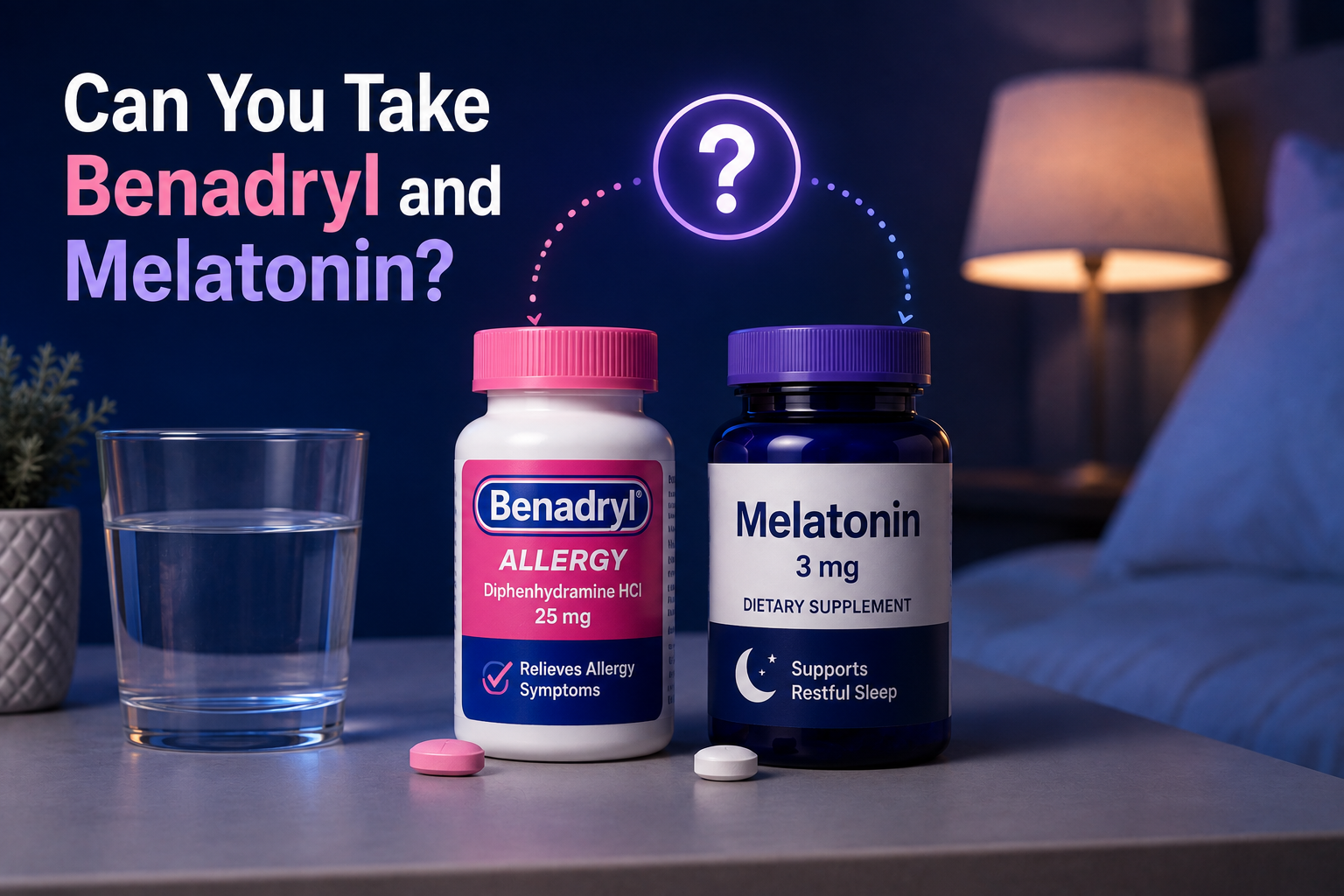
If you are asking can you take Benadryl and melatonin, it is important to know that both can make you sleepy. The key question is not whether they can physically be swallowed together, but whether combining them adds more sedation and risk than benefit.
Benadryl and melatonin are both easy to buy without a prescription in the United States, which can make the combination seem automatically low-risk. They work very differently, though. Benadryl contains diphenhydramine, a first-generation antihistamine that often causes drowsiness. Melatonin is a hormone-based dietary supplement used to influence the sleep-wake cycle.
Taking them together can increase sleepiness, slowed reaction time, dizziness, and next-day impairment. For that reason, routinely stacking Benadryl and melatonin for sleep is generally not the best first choice, especially if you are older, take other sedating medicines, drink alcohol, have certain medical conditions, or need to drive early the next morning.
The current MedlinePlus diphenhydramine guidance warns that diphenhydramine can cause drowsiness, that alcohol can worsen that drowsiness, and that older adults generally should not use it routinely because safer alternatives are often available.
| KEY TAKEAWAYS
· Benadryl and melatonin do not have a well-known dangerous chemical interaction, but both can increase sleepiness and impairment. · Combining them may cause more sedation, dizziness, confusion, poor coordination, or next-day grogginess than either one alone. · Avoid alcohol, cannabis, opioids, benzodiazepines, prescription sleep medicines, and other sedating products unless a clinician has reviewed the combination. · Diphenhydramine is a poor long-term sleep strategy and is generally a higher-risk choice in adults age 65 and older. · Children should not be given Benadryl as a sleep aid, and melatonin use in children should be discussed with a pediatric clinician. · If someone is difficult to wake, has abnormal breathing, collapses, has a seizure, or develops severe confusion, seek emergency help immediately. |
Question 1: Why Does Taking Them Together Make You Sleepier?
Diphenhydramine blocks histamine receptors. Histamine helps regulate allergic responses, but it also contributes to wakefulness in the brain. Because diphenhydramine readily enters the central nervous system, drowsiness is one of its most common effects.
Melatonin works differently. It signals biological night and helps coordinate circadian timing. Short-term melatonin use appears relatively safe for many adults, but it can still cause sleepiness, dizziness, headache, or nausea.
The National Center for Complementary and Integrative Health notes that melatonin can cause daytime drowsiness and can interact with medicines. When it is combined with another sedating product, the practical concern is additive impairment rather than a special reaction unique to these two substances.
That added sedation can matter even if you fall asleep successfully. You may be more unsteady when getting up at night, slower to react in an emergency, or groggier the next morning.
Question 2: Is One Accidental Combination an Emergency?
For a healthy adult who accidentally takes normal label-directed amounts of both products once, severe toxicity is not expected in every case. The more common concern is excessive drowsiness, dizziness, dry mouth, slowed reaction time, and next-day impairment.
The situation becomes more concerning if the amount was larger than recommended, the person is a child or older adult, other sedatives were taken, alcohol was involved, or symptoms are more severe than simple sleepiness.
Do not drive, operate machinery, or take more sleep medicine if you feel sedated. Stay in a safe environment and have another adult check on you if the drowsiness is unusually strong.
For an accidental extra dose or uncertain amount, Poison Control provides individualized guidance. Diphenhydramine overdose can cause marked sleepiness, fast heartbeat, confusion, hallucinations, seizures, coma, and other serious effects.
Question 3: Who Should Be Especially Careful?
Adults Age 65 and Older
Diphenhydramine is an anticholinergic medicine. In older adults it can cause more confusion, dry mouth, constipation, urinary retention, blurred vision, and fall risk. MedlinePlus states that diphenhydramine generally should not be used routinely in older adults except for certain serious allergic reactions because other treatments are often safer or more effective.
Melatonin may also remain active longer in older adults and contribute to next-day sleepiness. Combining the two can therefore be more impairing than it is in a younger adult.
Children and Teenagers
Benadryl should not be used simply to make a child sleep. Children can have unpredictable responses, including agitation rather than sedation, and dosing errors can be dangerous.
Melatonin products also deserve caution in children. NCCIH reports that many melatonin gummies have contained amounts that did not match their labels, and accidental pediatric ingestions have led to thousands of emergency department visits. Parents should discuss melatonin with a pediatric healthcare professional before using it regularly.
Pregnancy and Breastfeeding
There is limited information about melatonin supplement safety during pregnancy and breastfeeding. Diphenhydramine may be used in some pregnancy situations, but the reason for treatment, dose, timing, and other medicines still matter. A clinician or pharmacist should review the combination before routine use.
People With Glaucoma, Urinary Problems, or Certain Lung Conditions
Diphenhydramine can worsen some medical conditions because of its anticholinergic effects. MedlinePlus advises people with glaucoma, difficulty urinating, emphysema, chronic bronchitis, and other lung disease to discuss use with a healthcare professional.
Question 4: What Else Are You Taking That Night?
This is often more important than the Benadryl-melatonin combination itself. Sedation can accumulate when several products are used together.
Examples that can raise concern include:
- Cannabis products that cause drowsiness.
- Prescription sleep medicines such as zolpidem or eszopiclone.
- Benzodiazepines such as lorazepam, alprazolam, or clonazepam.
- Opioid pain medicines.
- Muscle relaxants.
- Sedating antidepressants or antipsychotic medicines.
- Other antihistamines or cold medicines that already contain diphenhydramine or another sedating ingredient.
The FDA nighttime sleep-aid monograph specifically warns users of diphenhydramine sleep products to avoid alcoholic beverages and to consult a doctor before using the product with sedatives or tranquilizers. It also warns against using more than one product that contains diphenhydramine.
What Does the Risk Look Like in Real Life?
| Situation | Example | What It Means |
| Lower concern | Healthy adult, one label-directed dose, no alcohol or other sedatives | Still expect possible extra drowsiness and next-day grogginess |
| Moderate concern | Older adult, history of falls, glaucoma, urinary retention, or multiple medicines | Combination may be inappropriate and should be reviewed |
| Higher concern | Alcohol, opioids, benzodiazepines, prescription sleep aids, or multiple sedating products | Sedation and impairment can become substantially greater |
| Urgent concern | Hard to wake, abnormal breathing, collapse, seizure, severe confusion, hallucinations, very fast heartbeat | Emergency evaluation is needed |
Is Benadryl a Good Sleep Aid by Itself?
Diphenhydramine can make people sleepy, but that does not make it an ideal long-term insomnia treatment. Tolerance to the sedating effect can develop, meaning the same dose may feel less effective over time while anticholinergic side effects remain.
Regular use can also mask the real reason sleep is poor. Chronic insomnia can be related to anxiety, depression, pain, sleep apnea, restless legs syndrome, circadian disruption, medications, caffeine, or inconsistent sleep habits.
For persistent insomnia, cognitive behavioral therapy for insomnia, often called CBT-I, has stronger long-term evidence than repeatedly adding over-the-counter sedatives. A clinician can also evaluate whether a medical or sleep disorder is contributing.
Is Melatonin the Safer Choice for Occasional Sleep Trouble?
Melatonin generally has a more favorable short-term safety profile than diphenhydramine for many adults, but it is not automatically the correct answer for every sleep problem.
It tends to work best when the problem involves circadian timing, such as delayed sleep timing or jet lag. Evidence for chronic insomnia is less convincing, and major sleep guidelines have not recommended melatonin as a routine treatment for chronic insomnia because the evidence is limited.
In the United States, melatonin is regulated as a dietary supplement rather than an over-the-counter drug. Product quality can vary, so choosing products with independent quality verification can reduce some uncertainty about what is actually in the bottle.
What If You Take Benadryl for Allergies, Not Sleep?
That changes the reason for use but not the sedation risk. If you need an antihistamine for allergies and also take melatonin at bedtime, the same additive drowsiness can occur.
Many people with routine seasonal allergies can use a less-sedating second-generation antihistamine such as cetirizine, loratadine, or fexofenadine instead of diphenhydramine, depending on their symptoms and medical history. A pharmacist can help compare options.
Do not switch allergy medicines solely because of one article if you are treating hives, a severe allergic reaction, or another condition for which a clinician specifically recommended diphenhydramine.
What Should You Do If You Already Took Both?
If you took normal amounts and feel only mildly sleepy, the safest practical steps are to avoid driving, alcohol, additional sedating medicines, and activities that require balance or quick reactions until you feel fully alert.
If the dose was larger than recommended, you are unsure how much was taken, a child swallowed the products, or symptoms are worsening, contact Poison Control for individualized advice rather than trying to estimate risk from the product label alone.
Call emergency services if the person cannot be awakened normally, has trouble breathing, collapses, has a seizure, or develops severe confusion or hallucinations.
Frequently Asked Questions
Can I take Benadryl and melatonin on the same night?
They can produce additive drowsiness. Routine combination is generally not the preferred approach without advice from a clinician or pharmacist, especially if you take other sedating medicines or have conditions that increase risk.
How long should I wait between Benadryl and melatonin?
There is no universally established waiting interval that removes the interaction concern. Diphenhydramine can remain sedating for hours, so separating the products by a short period does not guarantee that the effects will not overlap.
Can Benadryl and melatonin make you too sleepy?
Yes. Excessive sleepiness, dizziness, slowed reaction time, poor coordination, and next-day grogginess are the main practical concerns.
Is it safe to take them after drinking alcohol?
No. Alcohol can increase diphenhydramine-related drowsiness and impairment. Combining alcohol with multiple sleep-promoting products increases concern further.
Can children take Benadryl and melatonin together?
Do not use Benadryl to make a child sleep, and discuss melatonin use with a pediatric healthcare professional. Accidental or excessive ingestion of either product can require poison-center guidance.
Is Benadryl or melatonin better for insomnia?
Neither should automatically be treated as a long-term solution for chronic insomnia. Diphenhydramine has more anticholinergic and next-day impairment concerns, while evidence for melatonin in chronic insomnia is limited. Persistent sleep problems deserve evaluation for an underlying cause.
What if I accidentally took both once?
A one-time combination at normal amounts may mainly cause extra drowsiness in a healthy adult, but individual risk varies. Avoid driving and additional sedatives. If the amount was excessive, symptoms are severe, or the person is a child or vulnerable adult, contact Poison Control or seek urgent care.
The Bottom Line
Benadryl and melatonin can be taken into the body at the same time, but that does not make combining them a good routine sleep strategy. Both can cause drowsiness, and the effects may add together.
For a healthy adult who accidentally uses both once at normal amounts, the most likely issue is extra sedation rather than a unique toxic interaction. The risk rises with higher doses, alcohol, other sedatives, older age, certain medical conditions, and pediatric use.
If sleep trouble is happening often, the better solution is to identify why sleep is poor rather than repeatedly stacking over-the-counter products. A pharmacist, primary care clinician, or sleep specialist can help review medications and choose a safer plan.
This article provides general educational information and is not a substitute for individualized medical advice. Medication decisions should be based on the product label, your other medicines, medical conditions, age, and guidance from a qualified healthcare professional.