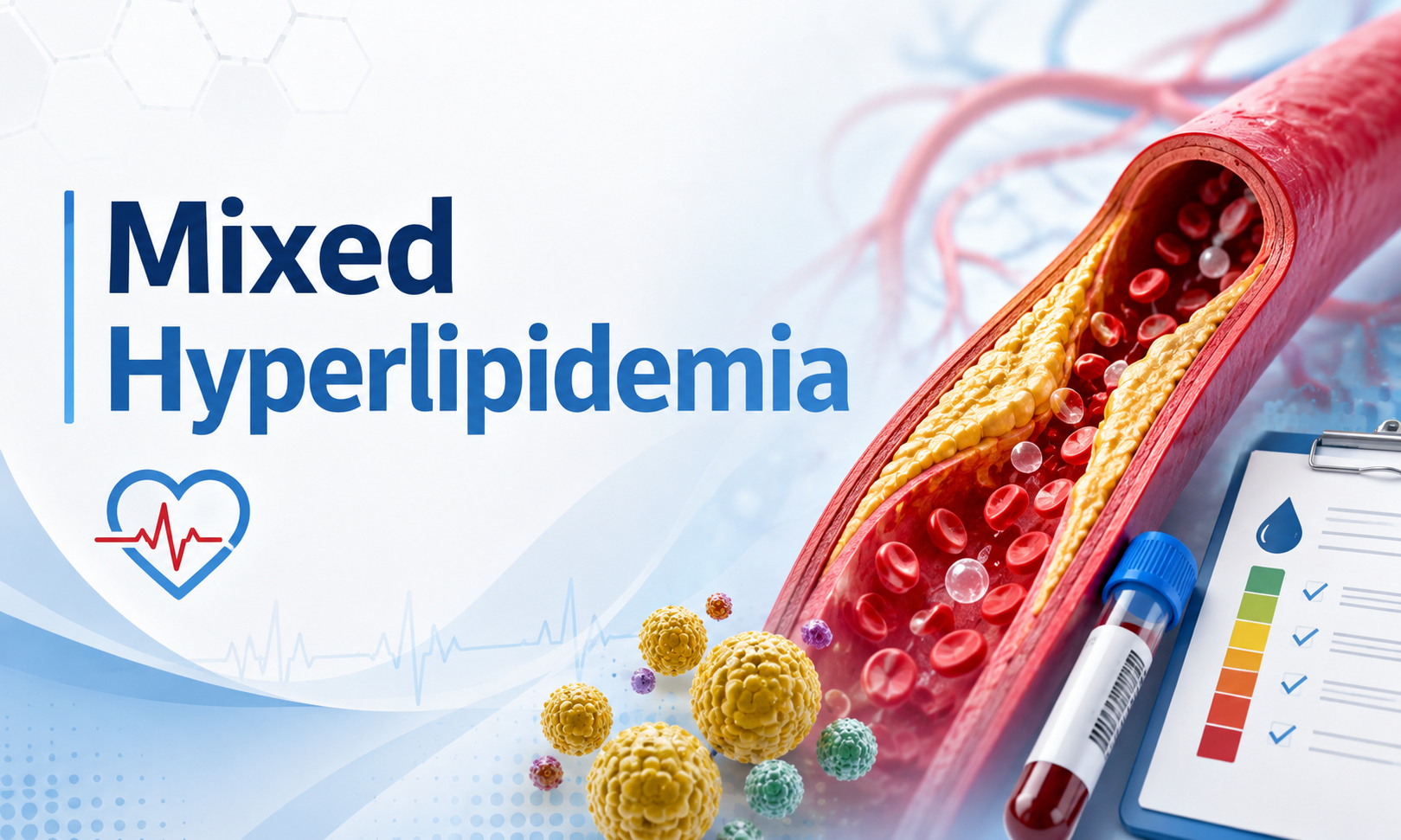
Mixed hyperlipidemia is not just one high cholesterol number. It is a combined pattern that can include elevated LDL cholesterol, elevated triglycerides, and other atherogenic particles that influence heart and pancreatitis risk.
A lipid panel may look like a row of unrelated numbers, but the pattern matters. Mixed hyperlipidemia generally means that more than one type of blood fat is abnormal at the same time, most often elevated LDL cholesterol and elevated triglycerides. Low HDL cholesterol may also be present, especially in people with insulin resistance, type 2 diabetes, excess abdominal weight, or metabolic syndrome.
The diagnosis deserves attention because LDL-rich particles and triglyceride-rich remnant particles can both contribute to plaque buildup in arteries. Very high triglycerides create a separate concern: acute pancreatitis. The best treatment plan therefore depends on which number is most urgent, why the pattern developed, and a person’s overall cardiovascular risk.
| KEY TAKEAWAYS
· Mixed hyperlipidemia usually describes high LDL cholesterol plus high triglycerides, although the exact pattern can vary. · It often causes no symptoms and is found on a lipid panel. · Common contributors include genetics, diabetes or insulin resistance, hypothyroidism, kidney or liver disease, alcohol, diet, certain medications, and excess weight. · Treatment in 2026 is risk-based. Clinicians look beyond LDL alone and may use non-HDL cholesterol, ApoB, Lp(a), family history, PREVENT risk, and sometimes a coronary calcium scan. · Triglycerides of 500 mg/dL or higher need prompt medical attention because pancreatitis risk rises, especially as levels approach or exceed 1,000 mg/dL. |
What Does the Word “Mixed” Actually Mean?
Hyperlipidemia means that one or more lipids or lipoproteins in the blood are higher than recommended. “Mixed” signals that the abnormality is not limited to a single component. In day-to-day practice, the term is often used when both cholesterol and triglycerides are elevated. It can describe a secondary pattern caused by another condition, or it can be part of an inherited disorder such as familial combined hyperlipidemia.
The CDC overview of LDL, HDL, and triglycerides explains why the combination matters: high triglycerides together with high LDL or low HDL is associated with greater risk of heart attack and other cardiovascular problems.
Read the Lipid Panel Like a Map
| Measurement | What It Reflects | Why It Matters in a Mixed Pattern | Common Reference Point |
| LDL-C | Cholesterol carried mainly in LDL particles | A major target because LDL particles can enter artery walls and support plaque formation | A desirable goal depends on overall risk, not one universal cutoff |
| Triglycerides | The main storage form of fat and a marker of triglyceride-rich particles | Higher levels may add cardiovascular risk; very high levels can trigger pancreatitis | Below 150 mg/dL is generally considered healthy for adults |
| HDL-C | Cholesterol carried in HDL particles | Low HDL often travels with insulin resistance and high triglycerides, but medication is not usually prescribed just to raise HDL | Interpret with the full risk profile |
| Non-HDL-C | Total cholesterol minus HDL cholesterol | Captures cholesterol in LDL and other atherogenic particles, which is useful when triglycerides are elevated | Treatment goals vary by cardiovascular risk |
| ApoB | The number of atherogenic lipoprotein particles | Can reveal particle-related risk that LDL-C alone may underestimate, especially with triglycerides above 200 mg/dL | Measured selectively, not required for every person |
Numbers are reported in milligrams per deciliter (mg/dL) in the United States. Your target may be lower if you have cardiovascular disease, diabetes, chronic kidney disease, or other major risk factors.
A Sample Lipid Panel, Decoded
| Total cholesterol | 248 mg/dL |
| LDL cholesterol | 151 mg/dL |
| HDL cholesterol | 39 mg/dL |
| Triglycerides | 289 mg/dL |
| Non-HDL cholesterol | 209 mg/dL |
This fictional result shows a classic mixed pattern: LDL and triglycerides are both elevated, HDL is low, and non-HDL cholesterol is high. It does not tell the whole story. A clinician would still ask whether the test was fasting, review blood pressure and blood sugar, check medications and alcohol intake, look for thyroid or kidney disease, ask about early heart disease in the family, and estimate short- and long-term cardiovascular risk.
One isolated panel is also not always the final diagnosis. Illness, recent alcohol use, a high-carbohydrate meal, pregnancy, medication changes, and poorly controlled blood sugar can alter results. A repeat fasting panel may be appropriate when triglycerides are high or the numbers do not fit the clinical picture.
Why Is Mixed Hyperlipidemia More Than “High Cholesterol”?
LDL cholesterol is important, but it is not the only atherogenic signal. When triglycerides rise, the bloodstream contains more triglyceride-rich lipoproteins and remnant particles. These particles can carry cholesterol into the artery wall. That is one reason non-HDL cholesterol and ApoB may be particularly useful when LDL-C seems only modestly elevated but triglycerides are high.
The updated 2026 ACC/AHA guideline on the management of dyslipidemia places greater emphasis on atherogenic particles beyond LDL-C. It recommends PREVENT-ASCVD equations for primary prevention risk assessment in adults ages 30 to 79, once-in-a-lifetime Lp(a) testing, selective ApoB testing, and risk-based LDL-C and non-HDL-C goals.
The second risk pathway is pancreatitis. Triglycerides above 500 mg/dL increase concern, and risk becomes especially important as levels approach or exceed 1,000 mg/dL. Severe upper abdominal pain, vomiting, fever, or pain that radiates to the back should be evaluated urgently.
Which Causes Should Be Checked First?
Mixed hyperlipidemia is a lab pattern, not a single cause. A useful evaluation starts with common and reversible contributors before assuming the problem is entirely genetic.
Common Secondary Contributors
- Insulin resistance, prediabetes, or type 2 diabetes, particularly when blood sugar is not well controlled
- Overweight, obesity, or metabolic syndrome
- Hypothyroidism
- Chronic kidney disease, nephrotic syndrome, or certain liver disorders
- Regular or heavy alcohol intake
- A diet high in saturated fat, refined carbohydrates, added sugars, or excess calories
- Low physical activity, smoking, and poor sleep patterns
- Pregnancy or hormonal changes in selected cases
- Medicines such as some corticosteroids, retinoids, antipsychotics, HIV therapies, estrogen products, beta blockers, diuretics, and certain breast cancer treatments
When Does an Inherited Disorder Become More Likely?
Familial combined hyperlipidemia is a common inherited lipid disorder, but it does not always produce the same numbers in every relative or at every test. One family member may have mostly high LDL, another may have mostly high triglycerides, and another may show both. Clues include lipid abnormalities in several close relatives, heart attack or stroke at a young age, persistently high ApoB, or abnormal results that remain significant despite strong lifestyle habits.
A family pattern does not mean lifestyle is irrelevant. Genetics and metabolic factors often interact. Weight gain, diabetes, alcohol, or certain medications can make an inherited tendency much more visible.
Does Mixed Hyperlipidemia Cause Symptoms?
Usually, no. Most people feel normal and discover the condition during routine screening. Symptoms generally come from complications or from extremely high lipid levels rather than from ordinary elevations themselves.
| Call 911 for Possible Cardiovascular Symptoms
· Chest pressure or pain · Sudden shortness of breath · Face drooping, arm weakness, or speech difficulty · Sudden severe weakness or fainting |
Seek Prompt Care for Possible Pancreatitis
· Severe upper abdominal pain · Pain spreading to the back · Persistent vomiting · Fever or a markedly tender abdomen |
Physical signs such as yellowish deposits around the eyelids, tendon xanthomas, or small eruptive xanthomas can occur with certain severe or inherited lipid disorders, but they are not present in most people with mixed hyperlipidemia.
What Tests Can Clarify the Diagnosis?
The starting test is a standard lipid panel. Depending on the result and health history, a clinician may add or repeat tests to answer three separate questions: Is the result persistent? Is there a secondary cause? Does the standard panel underestimate risk?
Confirm the pattern: Repeat a fasting lipid panel when triglycerides are elevated, the first test was nonfasting, or the result may have been affected by illness or recent alcohol intake.
Look for metabolic causes: Check fasting glucose or A1C, thyroid-stimulating hormone, liver enzymes, kidney function, blood pressure, weight, and waist-related risk factors.
Refine particle-related risk: Consider non-HDL cholesterol and ApoB, especially when triglycerides are above 200 mg/dL, diabetes is present, or LDL-C appears lower than expected for the overall pattern.
Identify inherited risk: Measure Lp(a) at least once in adulthood and review family history of premature heart disease. Genetic counseling or specialist evaluation may be appropriate in selected families.
Resolve uncertainty about treatment: For some adults with borderline or intermediate risk, a coronary artery calcium scan can help show whether plaque is already present and support a more confident decision about medication.
How Is Mixed Hyperlipidemia Treated in 2026?
Treatment has two tracks. The first reduces long-term atherosclerotic cardiovascular disease risk. The second prevents pancreatitis when triglycerides are very high. The same person may need both tracks, but the priority can change as the numbers improve.
Track 1: Lower Atherogenic Cholesterol and Overall Heart Risk
Statins remain the foundation of medication treatment for many adults because they lower LDL cholesterol and reduce the risk of heart attack and stroke. The 2026 guideline uses PREVENT-ASCVD risk categories, risk enhancers, and LDL-C or non-HDL-C goals to decide when treatment is reasonable and how intensive it should be. For people with established cardiovascular disease, diabetes, chronic kidney disease, HIV, very high LDL, or other major risk factors, medication may be recommended even when symptoms are absent.
If a statin does not achieve the appropriate goal or cannot be tolerated, clinicians may consider ezetimibe, bempedoic acid, PCSK9-targeting therapy, or another evidence-based option. The choice depends on the amount of LDL reduction needed, prior cardiovascular events, side effects, cost, insurance coverage, and patient preference.
Track 2: Bring Down High Triglycerides
The NHLBI guide to high blood triglycerides identifies below 150 mg/dL as a healthy adult level, 200 to 499 mg/dL as high, and above 500 mg/dL as very high. When triglycerides are moderately elevated, the plan usually emphasizes weight management, better glucose control, less added sugar and refined carbohydrate, limited alcohol, physical activity, and statin therapy when indicated for cardiovascular risk.
When triglycerides are 500 mg/dL or higher, and especially near or above 1,000 mg/dL, clinicians may use a very low-fat eating plan for a period, stop alcohol, correct secondary causes quickly, and prescribe triglyceride-lowering medication such as a fibrate or prescription omega-3 product. Over-the-counter fish oil supplements are not interchangeable with prescription products.
Medication Roles at a Glance
| Medication Class | Primary Role | Where It May Fit |
| Statins | Lower LDL-C and reduce cardiovascular events | Often first-line when ASCVD risk warrants medication; can also modestly lower triglycerides |
| Ezetimibe | Reduces intestinal cholesterol absorption | Common add-on when LDL-C remains above goal or a lower statin dose is preferred |
| Bempedoic acid | Lowers LDL-C through hepatic cholesterol synthesis pathway | An oral option for selected patients who need additional LDL reduction |
| PCSK9-targeting therapies | Produce substantial LDL-C lowering | Used for selected high-risk patients, familial disorders, or inadequate response to other therapy |
| Fibrates | Lower triglycerides | May be used when triglycerides are very high and pancreatitis prevention is a priority |
| Prescription omega-3 products | Lower triglycerides | Specific prescription formulations may be appropriate for selected patients; products are not all equivalent |
Medication decisions require a clinician who can review pregnancy status, liver and kidney function, drug interactions, muscle symptoms, and the reason each lipid target matters.
Which Lifestyle Changes Affect Which Number?
A generic instruction to “eat better” is not very useful. Mixed hyperlipidemia responds best when the lifestyle plan matches the lipid pattern.
| Action | Most Direct Effect | Practical Starting Point |
| Replace saturated fat with unsaturated fat | Helps lower LDL-C | Use olive or canola oil, nuts, seeds, avocado, and fish in place of butter, fatty processed meats, and high-saturated-fat snacks |
| Reduce added sugar and refined starches | Often lowers triglycerides | Cut sugary drinks, sweets, large portions of white bread, pastries, and highly refined snack foods |
| Limit or stop alcohol | Can sharply lower triglycerides in susceptible people | Avoid alcohol completely when triglycerides are very high or when advised by a clinician |
| Increase soluble fiber | Supports LDL-C reduction | Add oats, beans, lentils, barley, apples, citrus, and vegetables gradually |
| Lose excess weight when appropriate | Can improve triglycerides, HDL, glucose, and blood pressure | A modest, sustainable loss can improve the entire metabolic pattern |
| Exercise regularly | Improves triglycerides, insulin sensitivity, and overall risk | Build toward at least 150 minutes of moderate activity weekly, plus strength work when medically appropriate |
| Stop tobacco and nicotine exposure | Reduces cardiovascular risk beyond the lipid panel | Use evidence-based cessation support rather than relying on willpower alone |
| Improve sleep and treat sleep apnea | Supports metabolic and blood pressure control | Discuss loud snoring, witnessed pauses, or daytime sleepiness with a clinician |
How Soon Should Lipids Be Rechecked?
The interval depends on severity and treatment. After starting or changing a lipid-lowering medication, clinicians commonly repeat a lipid panel within several weeks to confirm response and adherence. Severe triglyceride elevations may require earlier follow-up. Once levels are stable, testing may be spaced farther apart based on age, risk, and medical history.
The goal is not simply to make every number “normal.” Follow-up should answer whether LDL-C and non-HDL-C are at the risk-appropriate goal, whether triglycerides have moved out of the pancreatitis range, whether a secondary cause has improved, and whether the treatment is tolerable enough to continue long term.
Questions to Bring to Your Next Appointment
- Is my main concern LDL-related plaque risk, triglyceride-related pancreatitis risk, or both?
- Should this lipid panel be repeated while fasting?
- Could diabetes, thyroid disease, kidney disease, liver disease, alcohol, or one of my medications be contributing?
- What are my LDL-C and non-HDL-C goals under the 2026 guideline?
- Would ApoB, Lp(a), or a coronary artery calcium scan change the treatment decision?
- Does my family history suggest familial combined hyperlipidemia or another inherited disorder?
- Which lifestyle change is most likely to improve my specific pattern?
- When should I repeat blood work, and what side effects should I report?
The Bottom Line
Mixed hyperlipidemia means that more than one blood lipid abnormality is present, commonly high LDL cholesterol and high triglycerides. It is usually silent, but it can increase long-term cardiovascular risk, and very high triglycerides can cause pancreatitis. The most useful next step is not to focus on total cholesterol alone. Confirm the pattern, search for reversible causes, assess inherited risk, and use a risk-based plan that targets the particles and numbers most likely to cause harm.
With consistent lifestyle changes, appropriate medication, and follow-up testing, most people can substantially improve their lipid profile and reduce the chance of heart attack, stroke, and other complications.
| Medical note: This article is for general education and does not diagnose or treat any condition. Lipid goals and medication choices should be individualized by a qualified healthcare professional. |