A claim-by-claim review of the formula, science, customer feedback, pricing, and subscription fine print
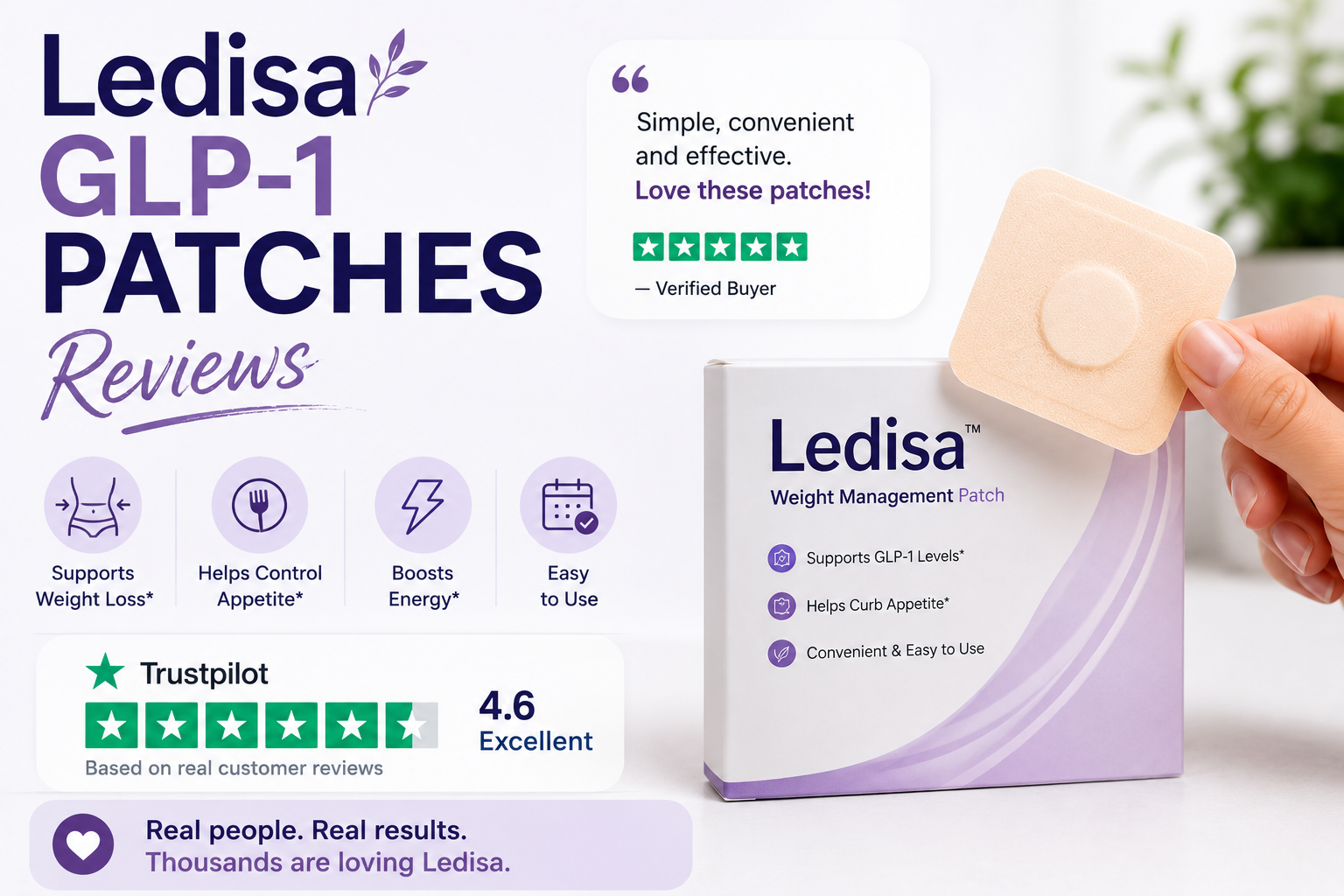
Ledisa GLP-1 patches reviews often mix three very different questions: Are the patches convenient? Do customers like the buying experience? And do they produce the weight-loss effects associated with prescription GLP-1 medicines? Those questions should not be treated as interchangeable. A product can earn positive service reviews while still lacking clinical evidence for its central health claim.
The most important fact appears in Ledisa’s own disclaimer: the patches do not contain GLP-1 and are not GLP-1 receptor agonist drugs. They are topical botanical patches marketed to support appetite and cravings. As of August 6, 2026, no publicly available human clinical trial identified in this review demonstrates that the finished Ledisa patch causes clinically meaningful weight loss or delivers its listed ingredients through intact skin at therapeutic levels.
| Bottom-line verdict
Ledisa may appeal to shoppers who want a simple daily wellness ritual, but it should not be evaluated as a nonprescription version of Wegovy, Zepbound, Ozempic, or another GLP-1 medicine. The brand name describes a support concept, not the active drug inside the patch. The evidence gap is substantial, and the subscription and refund details deserve close attention before checkout. |
The 2026 Ledisa Buyer Scorecard
| Area reviewed | Assessment | Why it matters |
| Product identity | Clear after reading the disclaimer | It contains botanical and nutrient ingredients, not GLP-1 medication. |
| Clinical proof for the finished patch | Insufficient | No published human trial was located showing meaningful weight loss from this specific product. |
| Ingredient transparency | Mixed | The current product page lists ingredients, but not the amount of each ingredient delivered per patch. |
| Customer-review signal | Positive but noisy | Many reviews discuss ordering, expectations, or service rather than measured outcomes. |
| Pricing clarity | Requires careful checkout review | One-time and subscription offers appear together, with promotional pricing that may vary. |
| Return protection | More limited than the headline suggests | The posted 90-day policy generally applies to sealed, unopened products and includes conditions. |
What Are Ledisa “GLP-1” Patches, Exactly?
On the official Ledisa product page, the company describes the product as a daily botanical patch for appetite and craving support. The current ingredient list includes berberine HCl, hydrolyzed psyllium extract, alpha-lipoic acid, apple cider vinegar extract, resveratrol, cinnamon, garcinia cambogia, L-glutamine, hops, chromium picolinate, magnesium citrate, pomegranate extract, several B vitamins, and trimethylglycine.
The same page states that the patch contains no GLP-1 and is not a GLP-1 agonist drug. This distinction is not a minor technicality. Prescription GLP-1 and dual GIP/GLP-1 medicines are standardized drugs with known doses, pharmacokinetic testing, clinical trials, prescribing information, and medical monitoring. Ledisa is a topical wellness product with a multi-ingredient botanical formula.
The product page instructs users to wear one patch for up to eight hours and apply a new patch daily. However, it does not display the amount of each active ingredient per patch or provide pharmacokinetic data showing how much reaches the bloodstream. Without dose and absorption data, shoppers cannot meaningfully compare the patch with oral studies of berberine, chromium, or other ingredients.
Claim Audit: What Is Supported and What Is Still Unproven?
| Marketing idea | What can be said fairly | Evidence gap |
| Supports appetite and cravings | Some listed ingredients have been studied orally for metabolic outcomes. | That does not prove the same effects when combined in this adhesive patch. |
| Supports natural GLP-1 production | Food, nutrients, and gut signaling can influence endogenous GLP-1 physiology. | The product page does not provide a human trial measuring GLP-1 changes after using Ledisa. |
| Bypasses digestion for better absorption | Transdermal delivery is valid for carefully engineered drugs. | A passive patch does not automatically make every botanical absorb in a reliable or useful dose. |
| Produces weight-loss results | Individual users may report appetite or weight changes. | Testimonials cannot establish causation, average effect size, or safety. |
| Science-backed ingredients | Research exists on several ingredients in other forms and doses. | Ingredient-level research is not the same as a trial of the finished Ledisa patch. |
Why transdermal delivery is the key unanswered question
Skin is designed to keep substances out. Successful prescription patches use molecules and formulations specifically engineered for predictable delivery. Research on larger molecules and many water-soluble compounds often requires enhancement technologies such as microneedles, iontophoresis, or other methods that disrupt or bypass the outer skin barrier. Ledisa’s consumer patch is described as a standard adhesive patch, not a microneedle or powered delivery system.
This does not prove that none of the listed ingredients can enter the skin. It means the clinically relevant questions remain unanswered: Which ingredients cross the skin, in what quantities, how consistently, and whether those amounts change appetite or body weight. A product-specific absorption study would be needed to answer those questions.
What the research says about “GLP-1 patches” more broadly
A 2026 HealthCentral review of GLP-1 patches emphasizes that products sold under this label generally contain supplements or herbs rather than prescription GLP-1 drugs. Experimental transdermal systems are being studied in laboratories, but those technologies should not be confused with botanical stickers already sold online.
The FDA has approved GLP-1 medicines in injections and, for some indications, oral forms. Approval is product-specific. The existence of approved GLP-1 drugs does not validate an unrelated patch that uses “GLP-1” as a marketing category while expressly stating that it contains no GLP-1 drug.
Do the Ingredients Make Ledisa Equivalent to a Weight-Loss Medication?
No. The formula includes recognizable wellness ingredients, but recognizable ingredients do not make a product equivalent to a prescription medicine. The route, dose, formulation, absorption, clinical endpoint, and quality controls all matter.
Berberine
The National Center for Complementary and Integrative Health notes that evidence for berberine and weight loss is not strong enough to establish effectiveness. Reported side effects in oral studies include nausea, abdominal discomfort, bloating, constipation, and diarrhea, and berberine can interact with medicines. Even favorable oral research cannot be transferred directly to an unquantified topical dose.
Chromium
Chromium is widely marketed for weight management, but federal evidence reviews characterize any average weight effect as very small and of questionable clinical relevance. A label that lists chromium without stating the delivered dose gives consumers little basis for judging whether it matches studied amounts.
Garcinia cambogia and multi-ingredient uncertainty
Garcinia cambogia has inconsistent weight-loss evidence and has been associated with reports of liver injury in products that contained it. Multi-ingredient formulations create an additional challenge because users and clinicians may not know which ingredient caused a skin reaction or systemic symptom. People taking prescription medicines should show the full ingredient list to a pharmacist or clinician before use.
| A useful label test
Look for the exact quantity of every active ingredient per patch, an independent certificate of analysis tied to the lot number, a human absorption study, and a randomized trial of the finished product. “Clinically studied ingredients” is not a substitute for those items. |
What Do Ledisa Customer Reviews Actually Tell Us?
Public customer feedback is strongly positive overall on Trustpilot as of early August 2026, but the content of individual reviews matters more than the star average. Some users report reduced cravings, smaller portions, easier routines, or changes in clothing fit. Others mention delivery delays, confusion at checkout, recurring charges, or difficulty obtaining refunds. Many recent five-star posts describe an easy order process or excitement to begin, not a completed trial with measured weight outcomes.
That creates a review-quality problem. A rating posted before the customer receives or uses the product cannot tell readers whether the patch works. Even a sincere report of weight loss cannot separate the patch from changes in food intake, activity, expectations, water weight, or other products. Reviews are useful for spotting patterns in shipping, adhesion, customer support, and billing. They are weak evidence for medical effectiveness.
How to read the reviews more intelligently
- Prioritize reviews written after at least four to eight weeks of use, not reviews posted at checkout.
- Look for starting weight, time frame, diet or activity changes, and whether the reviewer used other supplements or medications.
- Separate product comments from service comments. “Easy to order” is not an effectiveness result.
- Read one-star through three-star reviews for patterns involving skin irritation, adhesion, renewals, shipping, and refunds.
- Treat dramatic testimonials as anecdotes unless the claim is supported by controlled product-specific research.
Price and Subscription Review: The Part to Check Before Paying
Ledisa’s displayed prices and promotions can change. On August 6, 2026, the product page showed one-month, two-month, and three-month offers, with a lower price tied to “Subscribe & Save.” Shoppers should confirm the total charged today, number of packs, renewal amount, billing interval, shipping, and whether the selected option is one-time or recurring before submitting payment.
The posted return policy is more restrictive than the simple “90-day money-back” headline may imply. It generally says opened products cannot be returned and requires unopened, sealed packs, proof of purchase, photos, prior approval, and customer-paid return shipping. The policy also states that later subscription renewals are not covered by the original satisfaction guarantee and that processed cancellations may be subject to restocking or processing fees.
The safest checkout practice is to take screenshots of the selected purchase option, renewal schedule, total, and refund terms. Set a calendar reminder several days before the next billing date. The product page says subscriptions can be paused or canceled, while the terms advise canceling before the renewal deadline. Do not wait until the day of the charge.
Who Should Avoid Ledisa Patches or Ask a Clinician First?
The company advises against use during pregnancy or nursing and tells people taking medication to consult a healthcare professional. Additional caution is reasonable for people with diabetes, liver disease, kidney disease, a history of supplement reactions, or multiple prescriptions because several listed ingredients may affect glucose handling, drug metabolism, or tolerability.
- Do not apply a patch to broken, irritated, recently shaved, or inflamed skin.
- Stop use and remove the patch if you develop a spreading rash, swelling, blistering, severe burning, dizziness, trouble breathing, or another concerning reaction.
- Do not use the patch to replace prescribed diabetes or weight-management treatment.
- Tell your healthcare professional about every ingredient if you are preparing for surgery or taking medicines with a narrow safety range.
- Seek urgent care for trouble breathing, facial or throat swelling, fainting, or symptoms of a severe allergic reaction.
A Better Decision Framework Than “Does It Work?”
For a consumer product with limited clinical evidence, the decision is not simply yes or no. Ask whether the product matches your goal and whether you are comfortable paying for uncertainty.
| Your goal | More evidence-based next step |
| Lose a clinically meaningful amount of weight | Discuss structured nutrition care, behavioral treatment, FDA-approved medication eligibility, and other options with a qualified clinician. |
| Reduce snack cues or improve meal structure | Use measurable strategies such as protein and fiber targets, planned snacks, sleep improvement, and food-environment changes. |
| Try a non-pill wellness routine | Choose a low-cost habit with a clear outcome measure and no recurring billing, then review progress after four weeks. |
| Use berberine or another botanical | Ask a pharmacist about interactions and choose a product with transparent dosing and independent quality testing. |
Key Takeaways
- Ledisa GLP-1 patches do not contain GLP-1 and are not GLP-1 receptor agonist medication.
- The current formula lists multiple botanicals, nutrients, and extracts but does not disclose the amount of each ingredient delivered per patch on the product page reviewed.
- No product-specific human trial was located showing that Ledisa produces clinically meaningful weight loss or reliably delivers therapeutic ingredient levels through intact skin.
- Customer ratings may reflect ordering and customer service as much as product performance, so read the review text and timing rather than relying on the average score.
- Subscription discounts, renewal timing, unopened-product return limits, and possible fees should be reviewed before purchase.
- Ledisa should not replace evidence-based obesity or diabetes care.
Frequently Asked Questions
Are Ledisa patches the same as Ozempic or Wegovy?
No. Ozempic and Wegovy contain semaglutide, a prescription GLP-1 receptor agonist with standardized dosing and clinical-trial evidence. Ledisa states that its patch contains no GLP-1 drug and is not medically equivalent to these treatments.
Are Ledisa GLP-1 patches FDA approved?
The product is not an FDA-approved GLP-1 medication. Its own website says the claims have not been evaluated by the FDA and that the patch is not intended to diagnose, treat, cure, or prevent disease.
Can a patch deliver vitamins and herbs through the skin?
Some substances can be delivered through skin when the molecule, dose, adhesive, and formulation are specifically engineered and tested. A patch label alone does not establish useful absorption. Product-specific human data are needed.
How long should someone try Ledisa before judging it?
There is no validated clinical time frame because the finished product has not established an evidence-based average effect. Anyone choosing to try it should define a measurable goal, avoid changing several variables at once, monitor for reactions, and review the subscription deadline before the next charge.
What should I do if I was enrolled in a subscription unexpectedly?
Check the order confirmation and customer portal, cancel before the next billing date, and save written confirmation. Contact the company promptly if a charge has already processed. Keep screenshots and emails in case you need to document what was selected at checkout.
Final Review
The strongest conclusion from this 2026 review is not that every Ledisa customer will have a negative experience. It is that the product’s marketing category can create expectations that the evidence does not support. The patch is a multi-ingredient topical wellness product, not a GLP-1 drug. Some customers report fewer cravings or positive service experiences, but those reports do not establish a predictable medical effect.
For buyers, the practical decision comes down to transparency and opportunity cost. The formula lacks disclosed per-ingredient delivery amounts on the reviewed page, the finished patch lacks publicly demonstrated clinical efficacy, and the refund and subscription conditions require careful reading. People seeking meaningful weight loss or treatment for obesity, prediabetes, or type 2 diabetes are better served by an individualized plan with measurable outcomes and qualified medical guidance.
| Medical and editorial note
This article is for general educational purposes and is not a diagnosis, prescription, or substitute for personalized medical care. Product pages, prices, review totals, and policies can change. Details were checked on August 6, 2026. Brand and customer statements are reported as claims or experiences, not independently verified medical outcomes. |